
- All
- Product Name
- Product Keyword
- Product Model
- Product Summary
- Product Description
- Multi Field Search
 English
 Views: 0 Author: Site Editor Publish Time: 2025-11-25 Origin: Site


For many car enthusiasts, modifying a vehicle is more than a hobby—it’s a way of expressing personal style, enhancing performance, and creating a driving experience that feels uniquely their own. Among the most popular upgrades in the automotive world are body kits, which can dramatically reshape a car’s appearance and aerodynamics. But with so many options, materials, styles, and price ranges available, one common question arises: Are body kits really worth it?
A body kit refers to a collection of exterior modifications designed to alter a car’s appearance and sometimes improve functionality. Most kits include components such as:
Front bumpers
Rear bumpers
Side skirts
Spoilers or wings
Fenders or overfenders
Diffusers
Front lips
While some kits are mild and subtle, others are aggressive and transformative, giving the vehicle a completely new stance and identity.
Body kits come in several categories, each with distinct purposes:
Aesthetic body kits
Focus primarily on visual appeal without major aerodynamic changes.
Aerodynamic (“aero”) kits
Designed to reduce drag, increase downforce, or improve airflow around the vehicle.
Widebody kits
Expand the car’s width with larger fenders to fit wider wheels and tires.
Performance-driven kits
Combine aesthetics with functional improvements like improved cooling and track-ready aerodynamics.
Understanding these types helps car owners identify the right kit depending on their goals—appearance, performance, or both.
Let’s be honest: for many car enthusiasts, the visual transformation a body kit provides is the primary motivator behind installation. While performance and aerodynamics can be important, the ability to dramatically reshape a vehicle’s appearance is often the most immediate and satisfying benefit.
Body kits empower drivers to break free from the constraints of factory styling and create a car that reflects their personal taste. Whether your style leans toward sporty, aggressive, futuristic, minimalist, or luxury-inspired, there’s a kit to match. Japanese Domestic Market (JDM) kits often feature clean, sleek lines and subtle enhancements, appealing to enthusiasts who prefer understated elegance. On the other hand, widebody kits give a car a muscular, commanding stance, creating a visual impact that immediately conveys power and presence. European-style kits often emphasize refined, aerodynamic curves and premium finishes, lending older or mid-range models a more sophisticated and modern appearance.
With the right combination of front bumpers, side skirts, spoilers, and rear diffusers, a vehicle’s personality can be completely transformed. The ability to experiment with color, texture, and design allows enthusiasts to craft something unique that stands apart from the crowd, making a car instantly recognizable at car meets or on the streets.
Even subtle modifications, such as a redesigned front lip, aggressive side skirts, or a rear diffuser, can give a vehicle the illusion of being lower, wider, and more planted. These visual cues enhance a car’s road presence, making it appear more dynamic and performance-oriented without any mechanical changes. A full body kit amplifies this effect, giving the car a commanding stance that turns heads in urban settings, at track events, or during weekend cruises. It’s not just about style—it’s about creating a statement and projecting a sense of confidence and individuality on the road.
Body kits are also an excellent tool for refreshing older models. Cars that have begun to look dated can regain a contemporary, eye-catching appearance with the addition of a carefully chosen kit. By covering factory lines with bold, modern designs, owners can make their vehicles feel brand-new again. This is particularly useful for enthusiasts who want a stylish, updated look without investing in a new car. In some cases, well-selected body kits can even increase the resale appeal of older vehicles by giving them a refreshed, more desirable aesthetic.
While many people purchase body kits for style, performance-oriented kits do offer functional benefits—especially at higher speeds.
Quality aero kits are engineered to manage airflow around the car to:
Reduce drag
Increase downforce
Improve stability
Enhance fuel efficiency (in some cases)
Front splitters help push air over the car, side skirts reduce air turbulence, and diffusers help stabilize the rear at speed.
Some kits include larger air vents and ducts that help cool:
Brakes
Radiators
Intercoolers
Engine bays
This is especially useful for performance driving or track events.
Widebody kits allow drivers to install wider wheels and tires, improving grip and cornering performance.
That said, not all kits offer performance improvements. Lower-cost or purely aesthetic kits may not be designed with functional aerodynamics in mind. Enthusiasts seeking true performance should choose kits engineered with wind-tunnel testing or backed by reputable brands.
Choosing the right material is essential for durability, performance, installation difficulty, and cost.
Durable
Flexible
Good for daily driving
Easy to paint and install
ABS plastic is widely considered the best balance between affordability and quality.
Highly flexible
Resistant to cracking
Great for rough roads
PU is preferred by many for daily drivers due to its impact resistance.
Lightweight
Affordable
Easy to repair
However, fiberglass can crack more easily if stressed or impacted.
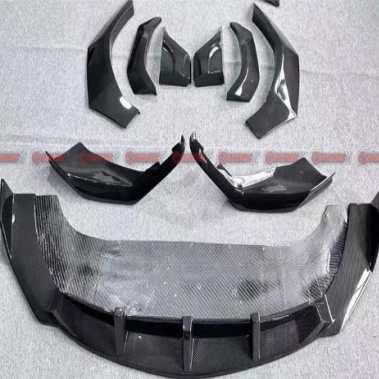
Extremely lightweight
High strength-to-weight ratio
Premium appearance
Carbon fiber kits are typically the most expensive and are popular among performance-focused users.
It depends on your priorities:
Daily drivers → ABS or PU
Show cars or budget builds → Fiberglass
Performance and track cars → Carbon fiber
Before purchasing a body kit, it’s essential to understand the total investment beyond the item’s price.
Body kits range widely in price:
Entry-level kits: $200–$800
Mid-range kits: $1,000–$3,000
Premium or custom kits: $3,000–$10,000+
Widebody and carbon-fiber kits tend to be the most expensive.
Installing a body kit isn’t always simple. Costs depend on:
Labor hours
Modification requirements
Painting
Fitment adjustments
Professional installation often runs from $500 to $3,000, with widebody installations costing significantly more due to cutting, bonding, and wheel fitting.
A kit will typically need:
Color-matching
Clear coating
Sanding and prep
Expect paint jobs to add $300–$1,500 depending on the shop and the complexity.
Low bumpers and side skirts look great—but they may scrape on speed bumps, steep driveways, or uneven roads. Daily drivers should consider the practical impact of lowered ground clearance.
To maximize the lifespan of a body kit, proper care is essential.
UV rays can damage paint and materials over time. Regular waxing and UV-protection coatings help maintain appearance.
The lower stance of body kits exposes them to gravel, road debris, and potholes. PU and ABS offer better impact resistance than fiberglass.
Use mild cleaning products and soft cloths. Harsh chemicals may degrade clear coats or damage more sensitive materials.
Owners should periodically check:
Bolts
Mounting points
Adhesive areas
Joint seals
This prevents rattling, loosening, or long-term damage.
So, are body kits a worthwhile investment? The answer depends on what you value most.
A customized and unique vehicle
Improved aerodynamics
Enhanced road presence
Upgraded performance capability
A refreshed look for an older car
A build that stands out at shows
You’re on a very tight budget
You’re not prepared for installation and paint costs
Your roads are rough and not kit-friendly
You prefer factory styling
Insurance restrictions may affect modifications
A well-chosen, well-installed body kit is absolutely worth it—both for the excitement it brings and the transformation it provides. The key is selecting the right type, material, and installer.
Here are practical tips to help buyers make smart decisions:
Decide whether you want aesthetics, performance, or both.
Avoid extremely cheap kits made with low-grade fiberglass—they can crack easily and may require constant repair.
Poor fitment leads to costly installation work. Check customer reviews and photos.
Well-known brands and trusted manufacturers offer superior engineering, safer materials, and better aesthetics.
A poorly installed kit can ruin appearance, compromise safety, or even damage the vehicle.
Some kits increase desirability—others may not appeal to all buyers. Choosing tasteful, well-designed kits can maintain value.
Body kits offer car enthusiasts an exciting opportunity to personalize their vehicles, improve aerodynamics, and create a truly unique driving experience. Whether you’re aiming for a subtle style boost or a dramatic full transformation, the right kit can elevate both appearance and performance. While there are important considerations—cost, installation, material selection, and practicality—a well-chosen body kit is a worthwhile investment that brings long-term satisfaction.
For those interested in exploring reliable, high-quality body kit options, Guangzhou CSS Auto Accessories Co., Ltd. offers a wide range of designs suitable for various models and customization goals. You can check out their products to gain more insights or contact the company if you’re looking for personalized recommendations—without feeling pressured by overly promotional messaging.


